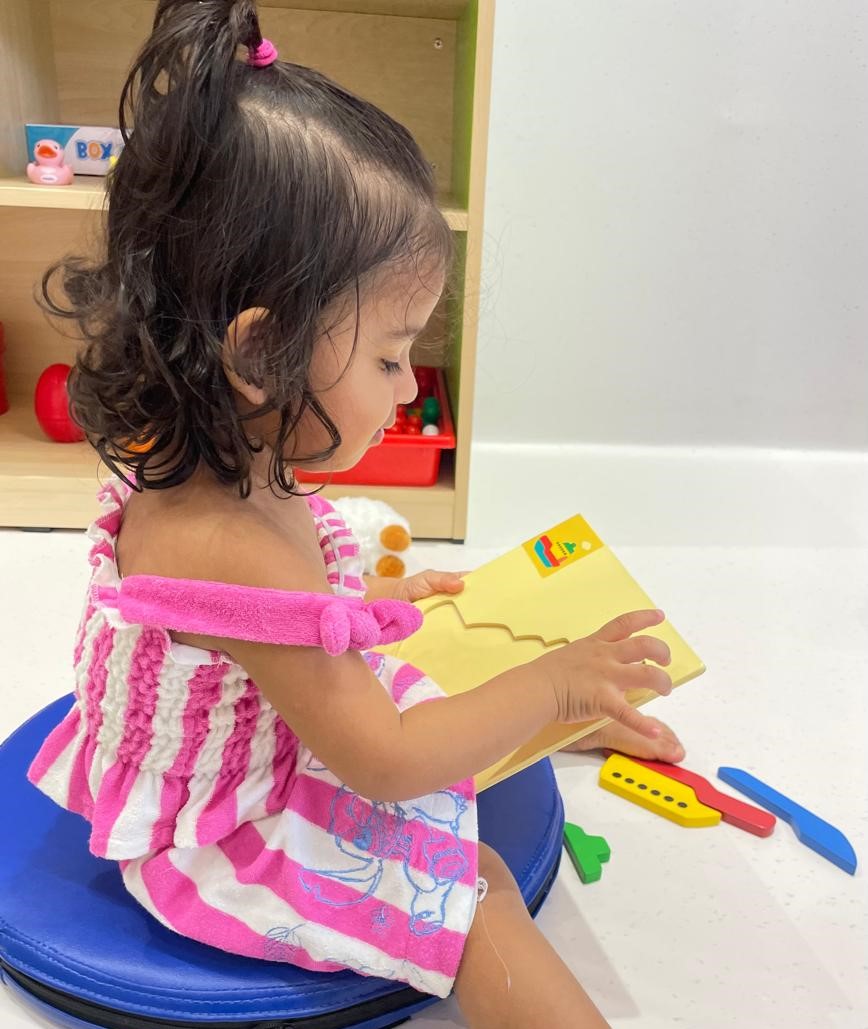
For a long time, choosing a school was driven by a fairly straightforward question: What will my child achieve? Parents wanted to know about academic foundations, curriculum, facilities and the skills their children would develop. These things still matter. Parents want their children to develop language, early literacy, numeracy and communication skills and to be prepared for the years of formal education ahead. But the conversation around the early years is becoming broader. Alongside questions about what children will learn, parents are increasingly thinking about how they will learn, how they will feel while learning and what kind of learners they will become.
Will my child be confident enough to ask questions? Will they be comfortable making mistakes? Will they know how to communicate what they need? Will they be able to make friends, solve small problems and try something independently? Will they remain curious when there isn't an obvious answer? These questions point to a larger shift in how we understand early childhood education. The early years are not simply about preparing children for the next academic stage. They are about building the foundations that help children approach every stage of learning with curiosity, confidence and resilience.
School Readiness Means More Than Knowing Letters and Numbers
When we talk about school readiness, it is easy to think about whether a child can recognise letters, count, identify colours or hold a pencil correctly. These foundational skills have their place, but readiness for school encompasses much more. A child entering a new environment needs to be able to communicate their needs, listen to others, participate in a group and navigate small frustrations. They need to develop the confidence to try something unfamiliar and the ability to ask for help when they need it. They need opportunities to make choices, interact with other children and gradually take responsibility for simple tasks.
These abilities may not always appear on a worksheet, but they are an important part of child development. During the preschool years, children are also developing their understanding of themselves as learners. The experiences they have at this stage can influence whether they see learning as something they simply receive from an adult or something they can actively participate in.
At K K Wagh Cubs, we believe school readiness is not about rushing children towards formal academics. It is about giving them the foundations to enter their next stage with confidence, curiosity and a willingness to learn.
Parents Are Looking for a More Holistic Approach
The idea of holistic child development has become increasingly important in conversations around early years education. A young child is developing in many different ways at the same time. Physical development, language, thinking, social and emotional skills, creativity, curiosity and values are all interconnected.
A child building with blocks, for example, may be developing fine motor skills while exploring balance and spatial relationships. When they build alongside another child, they may also be learning to communicate, negotiate and collaborate. A story can strengthen language and literacy while helping children recognise and talk about emotions. An outdoor activity can combine physical movement with observation and early scientific thinking.
This is why meaningful preschool education cannot be reduced to a list of academic outcomes. At K K Wagh Cubs, this belief is reflected in our PRAGYA approach and our seven areas of growth: Physical Development, Language & Literacy, Thinking & Numeracy, Social & Emotional Development, Creative Expression, STEM Discovery, and Values & Character. These areas are not treated as isolated subjects. They come together through experiences that allow children to learn, explore and grow in connected ways.
Play Is Not the Opposite of Learning
One of the most important shifts in the conversation around early childhood education is the growing recognition that play can be one of the most meaningful ways children learn. For a young child, play is how they explore the world.
When children build, pretend, draw, sing, move, sort, investigate or create, they are not simply passing time. They are testing ideas, solving problems, practising communication, making decisions and learning to persist when something doesn't work. A pretend shop can involve language, social interaction, counting and decision-making. Building with blocks can involve spatial reasoning, creativity and problem-solving. A group game can teach children about cooperation, rules and managing emotions.
This is the thinking behind play-based learning and learning through play. At K K Wagh Cubs, play is not treated as a break from learning. It is part of the learning experience itself. Through our experiential learning approach, children are encouraged to investigate, create, express, imagine and engage with ideas through hands-on experiences.
Because when children are genuinely involved in what they are doing, learning becomes something they experience rather than something they are simply told.
Curiosity May Be One of the Most Important Outcomes
Every parent has experienced the endless "Why?" phase. Why is the sky blue? Why do ants walk in a line? Why can't I stay awake all night? Why does my shadow follow me? It can be exhausting. But for an early years educator, that curiosity is valuable.
A question is often the beginning of inquiry. Instead of giving children every answer, adults can encourage them to think about how they might find the answer themselves. "What do you think?" "What could we try?" "What might happen if we did it differently?" These questions encourage children to move from simply receiving information to actively participating in the learning process.
This is an important part of experiential learning. Children don't always need to be told how something works before they encounter it. Sometimes they need the opportunity to observe, experiment, make a prediction, get it wrong and try again. That process can build something far more valuable than the answer to one question: the confidence to ask the next one.
Emotional Development Is Part of Learning
A child can know their numbers and letters and still find it difficult to participate in a classroom if they are unable to communicate their needs, manage frustration or feel comfortable interacting with others. This is why social and emotional development is an essential part of early childhood education rather than an additional activity.
Young children need opportunities to recognise and name their emotions, understand how others may be feeling, negotiate with friends and experience both success and disappointment. They need adults who can help them understand their feelings while also giving them age-appropriate opportunities to work through them.
A child who learns to say, "I'm upset because I wanted a turn," is developing an important life skill. A child who learns to wait, negotiate or try again after something doesn't work is developing another. These moments may not look academic, but they are building the foundations of confidence, resilience and relationships.
At K K Wagh Cubs, social and emotional development is woven into the everyday learning experience. We want children to experience preschool as a place where they feel secure enough to express themselves, curious enough to explore and confident enough to participate.
Independence Is Becoming an Important Part of the Conversation
Parents are also thinking more carefully about independence. Not independence in the sense that a four-year-old should be expected to manage everything alone, but the gradual development of self-confidence and agency.
Can a child choose between two activities? Can they put away their belongings? Can they attempt something before asking an adult to do it? Can they make a simple decision? Can they recognise when they need help?
These small moments matter because independence develops gradually. A child who is given opportunities to make choices and take responsibility begins to develop a belief in their own ability. They learn that mistakes don't mean they have failed and that asking for help doesn't mean they are incapable.
This is an important part of the Cubs Learning Journey. At K K Wagh Cubs, children are given age-appropriate opportunities to participate, make choices, explore independently and gradually take greater ownership of their learning experiences.
What Should Parents Look For When Choosing a Preschool?
These ordinary moments are where many of the foundations of early childhood development are built.
For parents exploring a preschool in Kharghar or preschool in Kharghar, Navi Mumbai, the question isn't simply which school offers the longest list of activities. It is worth looking more closely at how those activities are designed and what children are actually experiencing.
Ask how children learn. Ask how much opportunity they have for play, exploration and hands-on experiences. Ask whether children are encouraged to ask questions and make choices. Ask how teachers support social and emotional development. Ask how the school approaches independence and school readiness.
And when you visit a preschool in Kharghar, look beyond the walls and furniture. Watch the children. Do they seem comfortable? Are they curious about what is around them? Do they have opportunities to interact with one another? Are adults listening to them? Do children seem free to explore while still having the structure and support they need?
These observations can tell you a great deal about the kind of learning environment a school is creating.
At K K Wagh Cubs, our Cubs Learning Journey is designed to meet children where they are and support them as they grow, from the early experiences of Tiny Cubs to the increasing confidence and independence developed through the later stages of the programme. The focus remains on creating a joyful and meaningful foundation for the years of learning ahead.
What Parents Are Really Choosing
Perhaps the biggest change isn't that parents care less about results. It is that they are beginning to define results differently
A meaningful outcome in the early years may be a child who wants to know more. A child who is comfortable asking a question even when they don't know the answer. A child who can make a friend, communicate how they feel, try something independently and recover when something doesn't work.
These are outcomes that may not fit neatly into a report card, but they matter. Because the purpose of early childhood education is not simply to help children know more before they enter formal school. It is to help them become learners who are curious enough to explore, confident enough to participate, resilient enough to keep trying and secure enough to know that they don't have to know everything yet.
At K K Wagh Cubs, this is what we mean when we talk about Learning That Begins with Joy. We want children to begin their educational journey not with the pressure to have all the answers, but with the confidence to keep asking questions.
Because the most valuable result of the early years may not be what a child can recite. It may simply be that they still want to discover what comes next.
Thinking about preschool for your child? Come experience the Cubs Learning Journey for yourself. Book a visit to K K Wagh Cubs, Kharghar, and discover an early learning environment where curiosity, confidence and joyful learning come together
Come see this philosophy in action
Visit our campus at Sai World Empire, Sector 36, Kharghar — and meet the teachers who partner with parents every day.