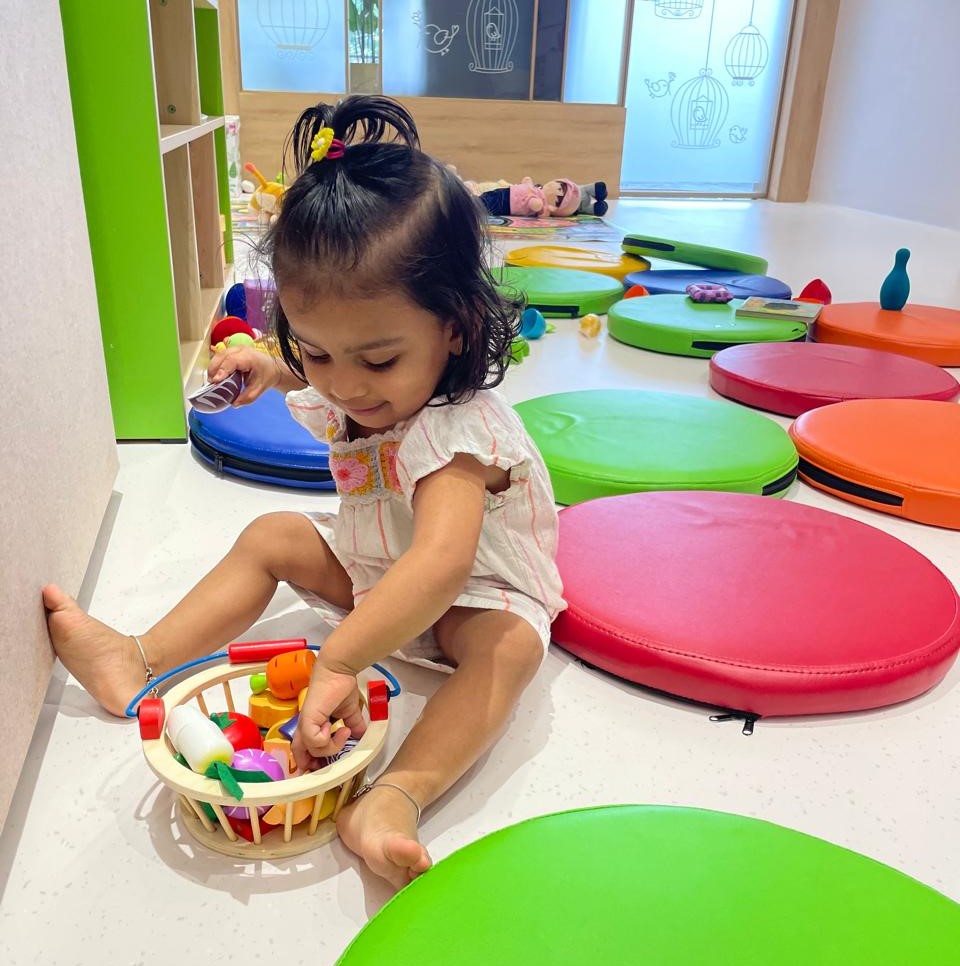
A healthy family doesn't necessarily have a perfect routine. There are rushed mornings, forgotten water bottles, untidy bedrooms, arguments over vegetables and the occasional bedtime negotiation that somehow lasts twenty minutes. Real family life can be wonderfully messy.
Healthy families aren't defined by the absence of chaos. They are defined by what happens within it: the way family members communicate, the routines they create, the space children are given to express themselves, and the opportunities they have to participate, make choices and feel secure.
For young children, these everyday experiences have a powerful influence on early childhood development. Long before a child begins formal schooling, their family environment is shaping how they communicate, respond to challenges, interact with others and understand themselves.
The good news is that supporting healthy child development doesn't require parents to create a perfect home or fill every day with carefully planned activities. Often, it comes down to a few simple habits that are repeated consistently.
Healthy families create predictable rhythms
Young children find comfort in knowing what comes next. A predictable morning routine, regular mealtimes, familiar bedtime rituals and consistent transitions can give children a sense of security and help them understand the rhythm of their day.
The routine doesn't need to be complicated. Waking up, getting dressed, having breakfast, packing a school bag and leaving home at roughly the same time each morning can gradually help children understand what is expected of them. Over time, these repeated experiences also create opportunities for independence.
A child who learns to put their shoes away, carry their own small bag or help get ready for the day is doing more than completing a task. They are developing a sense of responsibility and beginning to understand that they can contribute to the family.
This is one of the reasons healthy routines for children are so valuable. Routines provide both structure and opportunities for children to participate in their own daily lives.
They make everyday moments learning opportunities
Early childhood learning doesn't happen only when a child is sitting at a table with an activity in front of them. It happens while they are helping, talking, observing, moving and making choices.
A family meal, for example, can become a conversation about where food comes from, the colours and textures on the plate or what happened during the day. Helping in the kitchen can introduce ideas of measurement, sequencing and following instructions. A walk outside can become an opportunity to notice insects, leaves, vehicles or changes in the weather.
These are simple child development activities at home, but their value lies in the interaction around them. When adults talk with children, ask questions and encourage them to participate, ordinary experiences become opportunities to develop language, thinking, observation and social skills.
This is closely aligned with the principles of experiential learning. Children understand the world not only by being told about it, but by experiencing it.
They give children opportunities to be capable
"You're too small. I'll do it."
It is an easy sentence for a parent to say, especially when everyone is rushing to get out of the house. But children need opportunities to discover what they can do.
Letting a child put away their toys, choose between two outfits, carry their own school bag, water a plant or help set the table may take longer than doing it ourselves. Yet these small responsibilities communicate something important: you are capable, and we trust you to try. This sense of capability is an important part of independence in early childhood.
Independence doesn't mean expecting young children to do everything without help. It means gradually giving them opportunities to make choices, attempt tasks, solve small problems and ask for support when they need it.
These are also important foundations for school readiness. A child who is used to participating in everyday routines and making age-appropriate choices is gradually developing the confidence needed to navigate a new environment.
They make space for big feelings
Children don't always have the words to explain what they are experiencing. A tired child may become angry. A frustrated child may cry. A nervous child may suddenly refuse to participate. A child who wants something very badly may struggle to understand why they cannot have it.
Healthy families don't expect children to behave like miniature adults. Instead, they help children gradually understand their emotions.
"You are upset because the game ended." "You wanted to do it yourself." "That felt a little scary." Putting feelings into words helps children begin developing emotional awareness.
It also gives them language they can eventually use to communicate what they need. This is an important part of social and emotional development, and it plays a significant role in holistic child development. Children need opportunities to experience emotions, understand them and gradually learn ways of managing them, with supportive adults beside them.
At K K Wagh Cubs, we see emotional development as an integral part of the early years rather than something separate from learning. A child's ability to connect with others, express themselves, navigate disagreements and build confidence is just as important to their learning journey as their emerging academic skills.
They don't feel the need to fill every minute
Modern childhood can become surprisingly busy. Between school, activities, classes, playdates and screens, there can be very little empty space in a child's day. But children don't need every minute to be structured.
Unstructured time can be valuable. A child who isn't immediately given something to do may invent a game, build a fort, create a story, observe what is happening around them or simply figure out what they want to do next.
This is one reason play-based learning is so important during the early years. Play gives children the freedom to make choices, experiment, imagine and solve problems without always looking for a predetermined answer.
At K K Wagh Cubs, play is an important part of how children experience learning. We believe that meaningful learning can emerge when children are given the freedom to explore and engage with their environment rather than being constantly directed from one activity to another. Sometimes, leaving a little room in the day is itself an opportunity for learning.
They read, talk and tell stories
A child doesn't need a huge library to benefit from storytelling. Sometimes, one favourite book read again and again can become an incredibly rich learning experience. Children begin to anticipate what happens next, recognise familiar words, ask questions, remember details and connect the story to their own experiences.
Eventually, they start changing the story, adding their own characters or creating completely new ones.
Storytelling supports language and literacy, but its value extends beyond language. Stories introduce children to emotions, relationships, different perspectives and possibilities. They give children a way to make sense of experiences and imagine worlds beyond their own.
This is why storytelling has an important place within the learning environment at K K Wagh Cubs. Our spaces include a dedicated Story Nest, designed to encourage children to engage with stories, language and imagination in a setting that feels inviting and joyful. For young children, imagination isn't separate from learning. It is one of the ways they learn to understand the world.
They make space for movement, creativity and exploration
Healthy development is not only about what happens in a child's mind. Young children need opportunities to move, create, touch, build, experiment and explore. Physical activity supports physical development, while creative experiences allow children to communicate ideas that they may not yet have the words to express.
Painting, music, movement, construction, sensory experiences and outdoor play can all contribute to a child's development in different ways.
At K K Wagh Cubs, this understanding is reflected in our approach to holistic child development. Through our PRAGYA framework, children encounter opportunities across Physical Development, Language & Literacy, Thinking & Numeracy, Social & Emotional Development, Creative Expression, STEM Discovery, and Values & Character.
These areas don't exist in isolation. A single experience can touch several of them at once. A child building something with a friend may be developing physical coordination, problem-solving, communication and social skills. A story followed by a creative activity may combine language, emotional understanding and creative expression. This is what makes the early years such a rich period of development.
They choose connection over perfection
Perhaps the most important habit of all is also the simplest: healthy families make children feel seen.
A child doesn't need a perfectly organised home. They need adults who listen, offer reassurance, set boundaries and give them opportunities to explore. They need the freedom to make small mistakes and the confidence that home remains a safe place to return to.
Sometimes the connection looks like reading a bedtime story. Sometimes it is listening to a long explanation about something that happened at preschool. Sometimes it is sitting beside a child while they work through a difficult emotion. Sometimes it is simply putting the phone away and giving them your full attention for a few minutes.
These moments may not feel significant while they are happening, but they contribute to a child's sense of security, confidence and belonging. And that matters enormously during the early years.
A healthy childhood isn't about getting everything right
There is no perfect family routine, just as there is no single formula for raising a happy and confident child.
What matters is the accumulation of everyday experiences: being listened to, having opportunities to try, knowing what to expect, being allowed to play, learning to express emotions, participating in family life and feeling that the adults around you believe in your capabilities.
These experiences create a strong foundation for early childhood development. When children move into preschool, that foundation doesn't disappear. It becomes the starting point for a new stage of their learning journey.
At K K Wagh Cubs, we believe the strongest early years education is one that works in partnership with families. The experiences children have at home and the experiences they have at preschool can reinforce one another, creating a consistent environment in which children feel secure enough to explore and confident enough to grow.
Because healthy development isn't built through one extraordinary activity. It is built through hundreds of ordinary moments. A conversation. A shared meal. A story. A messy game. A little responsibility. A patient explanation. A second chance.
Child development happens every day, and family life is one of its most important classrooms.
Take the next step in your child's learning journey
Exploring a preschool in Kharghar that values holistic child development, play and family partnership? We'd love to welcome you.